ACVR1(G328V)-NanoLuc® Fusion Vector
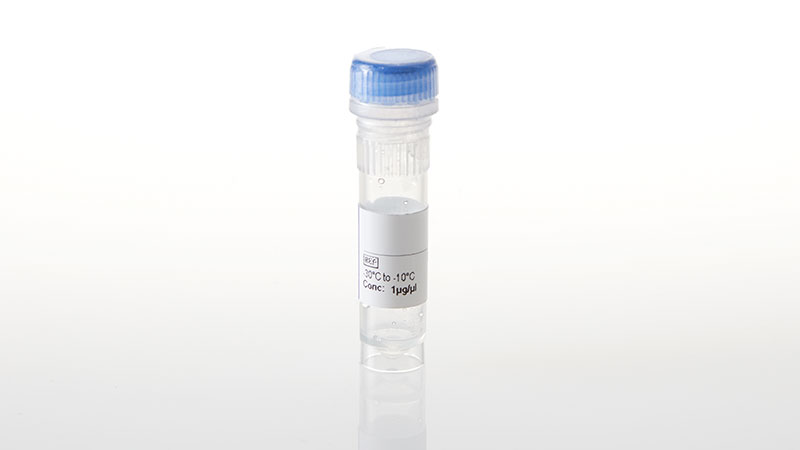
Kinase Fusion Vector for NanoBRET® Target Engagement
- Transfection-ready DNA to express full-length ACVR1(G328V) kinase fused to NanoLuc® Luciferase
- Measures kinase target engagement in live cells
- Use with NanoBRET® TE Intracellular Kinase Assay, Adherent Format protocol

Catalog Number:
Size
Catalog Number: NV2351
Expresse Fusões NanoLuc®-Kinase de Comprimento Total em Células de Mamíferos
O vetor de fusão ACVR1(G328V)-NanoLuc® contém a região de codificação da luciferase NanoLuc® fundida ao terminal C da quinase humana ACVR1(G328V). Ele foi projetado para ser usado com o protocolo NanoBRET™ Target Engagement (TE) Intracellular Kinase Assay, Adherent Format, no qual o plasmídeo pode ser transfectado em várias linhas celulares para análise do envolvimento do alvo ACVR1(G328V). Os vetores de fusão de quinase luciferase NanoLuc® são fornecidos prontos para transfecção. O promotor CMV conduz a expressão da proteína de fusão NanoLuc® kinase de comprimento total.
Detalhes Vetoriais:
Sobre os Nomes dos Vetores de Fusão de Kinase
A colocação do NanoLuc® a 5' ou 3' do gene da quinase é otimizada para uso com os ensaios NanoBRET™ TE e refletida no nome do vetor. Por exemplo, NanoLuc®-kinase implica que o NanoLuc® está a 5' do gene da quinase (no terminal N da quinase). Da mesma forma, kinase-NanoLuc® implica que o NanoLuc® está a 3' do gene da quinase (no terminal C da quinase).
Ensaios de Quinase Intracelular NanoBRET™ Target Engagement (TE)
Os ensaios de quinase intracelular NanoBRET™ TE podem analisar a afinidade dos compostos de teste por meio do deslocamento competitivo de um marcador NanoBRET™ fluorescente ligado reversivelmente a uma proteína de fusão de quinase NanoLuc® nas células. A introdução de compostos de teste concorrentes resulta em uma diminuição dependente da dose no sinal NanoBRET™ para estimar a afinidade intracelular contra a proteína-alvo. O NanoBRET™ Tracer utilizado é determinado por sua escolha do vetor de fusão de quinase NanoLuc®. A tabela Kinase Vector Selection mostra qual ensaio NanoBRET™ Tracer é correto para cada vetor de fusão de quinase.
Protocols
No protocols available
Specifications
Catalog Number:
What's in the box?
| Item | Código | Tamanho | Concentration |
|---|---|---|---|
ACVR1(G328V)-NanoLuc® Fusion Vector |
NV235A | 1 × 20μg | 1μg/μl |
SDS
Search for SDSCertificado de Análise
Restrições de uso
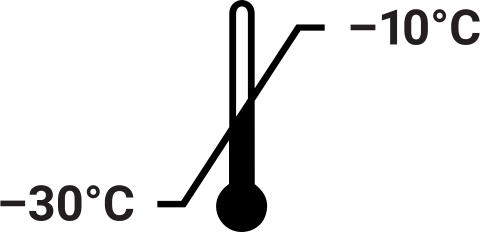
For Research Use Only. Not for Use in Diagnostic Procedures.Condições de armazenamento
NanoLuc® ORF TE Vector Limited Use Label License
BY USE OF THIS PRODUCT, RESEARCHER AGREES TO BE BOUND BY THE TERMS OF THIS LIMITED USE LABEL LICENSE. If researcher is not willing to accept the terms of this label license, and the product is unused, Promega will accept return of the unused product and provide researcher with a full refund.
Researcher may use this product for research use only; no transfer or commercial use of this product is allowed. Commercial use means any and all uses of this product by a party in exchange for consideration, including, but not limited to (1) use in further product manufacture; (2) use in provision of services, information or data; and (3) resale of the product, whether or not such product is resold for use in research. Researcher shall have no right to modify or otherwise create variations of the nucleotide sequence of the luciferase gene. No other use of this product is authorized without the prior express written consent of Promega.
In addition, researcher must:
(1a) use Nano-Glo®-branded luminescent assay reagents (LARs) for all determinations of luminescence activity of this product; or
(1b) contact Promega to obtain a license for use of the product with LARs not manufactured by Promega.
For uses of this product (NanoLuc® ORF Vector) for energy transfer (such as bioluminescence resonance energy transfer), researcher must:
(2a) use NanoBRET®-branded luminescent assay reagents (LARs; e.g., NanoBRET® Nano-Glo® Substrate), Intracellular TE Nano-Glo® Substrate/Inhibitor or Intracellular TE Nano-Glo® Vivazine®/Inhibitor for all determinations of luminescent activity; and
(2b) use NanoBRET®-branded energy acceptors (e.g., NanoBRET® tracers, NanoBRET® dyes, BRET-optimized HaloTag® ligands) for all determinations of energy transfer activity; or
(2c) contact Promega to obtain a license for use of the product for energy transfer assays using energy acceptors not manufactured by Promega. No license is needed if the energy transfer acceptor is a genetically encoded autofluorescent protein.
With respect to any uses outside this label license, including any diagnostic, therapeutic, prophylactic or commercial uses, please contact Promega for supply and licensing information. PROMEGA MAKES NO REPRESENTATIONS OR WARRANTIES OF ANY KIND, EITHER EXPRESSED OR IMPLIED, INCLUDING FOR MERCHANTABILITY OR FITNESS FOR A PARTICULAR PURPOSE, WITH REGARD TO THE PRODUCT. The terms of this label license shall be governed under the laws of the State of Wisconsin, USA.
U.S. Pat. Nos. 8,557,970, 8,669,103, 9,777,311, 9,840,730, 9,951,373, 10,233,485, 10,633,690, 10,774,364, 10,844,422, 11,365,436, 11,661,623, 11,667,950; European Pat. Nos. 2456864, 2635595, 2990478, 3181687, 3409764; Japanese Pat. Nos. 6038649, 6155424, 6227615, 6374420, 6539689; and other patents and patents pending.
Resources
No related resources available